

Running a half marathon is a remarkable challenge that tests an athlete’s endurance, speed, and mental fortitude. While many runners focus primarily on logging miles, incorporating strength training into your regimen can significantly enhance performance and reduce injury risk. Whether you’re a beginner, intermediate, or advanced runner, strength training is essential for optimizing your half marathon training. This article delves into the importance of strength training across different athletic levels and provides insights into how it can elevate your running game.
Why Strength Training is Essential for Runners
- Injury Prevention: Strength training fortifies muscles, tendons, and ligaments, which helps stabilize joints and absorb the impact forces associated with running. By building a more resilient musculoskeletal system, runners can prevent common injuries such as shin splints, IT band syndrome, and runner’s knee. Stronger muscles and connective tissues can better withstand the repetitive stress of running, ensuring a safer, more sustainable running practice.
- Enhanced Running Economy: Running economy refers to the amount of oxygen a runner uses at a given pace. Strength training improves running economy by increasing muscle strength and efficiency. Stronger muscles require less effort to maintain a specific pace, allowing runners to conserve energy over long distances. This means you can run faster with the same amount of effort, a critical factor in distance running.
- Increased Speed and Power: Strength training, particularly exercises that target the lower body and core, can significantly enhance a runner’s speed and power. Plyometric exercises like jump squats and box jumps develop explosive strength, improving your ability to sprint and accelerate. Additionally, stronger leg muscles contribute to a more powerful stride, enabling faster running times.
- Improved Endurance: Building muscular endurance is crucial for half marathon runners. Strength training helps delay muscle fatigue, allowing you to maintain a steady pace for longer periods. Exercises that target endurance, such as high-rep, low-weight resistance training, condition your muscles to perform optimally over extended distances.
Strength Training for Different Levels of Runners
Beginners: Laying the Foundation
For novice runners, strength training establishes a foundation of muscle strength and stability. Beginners should focus on mastering basic movements and building overall body strength.
Key Exercises:
- Side Step Squats: Enhance leg strength and stability, crucial for maintaining proper running form.
- Push-Ups with Shoulder Taps: Improve upper body strength and posture, essential for maintaining a relaxed running form.
- Low Plank Side to Side Step: Strengthen the core, improving balance and reducing lower back pain during long runs.
- Single Leg Glute Bridges: Activate the glutes, essential for propulsion and reducing knee injuries.
- Standing Calf Raises: Strengthen the calves, improving push-off power and reducing the risk of Achilles tendonitis.
Training Tips:
– Start with two strength training sessions per week.
– Focus on proper form to prevent injuries and maximize benefits.
– Gradually increase the intensity and volume as your strength improves.
Intermediate Runners: Building Strength and Stability
Intermediate runners have some experience with strength training and can benefit from more challenging exercises that enhance stability and power.
Key Exercises:
- Bulgarian Split Squats with Static Hold: Improve unilateral leg strength and balance, addressing any muscle imbalances.
- Side to Side T’s with Knee: Strengthen the upper body, improving overall posture and reducing fatigue in the upper body during runs.
- High Side Plank Lift on Yoga Block: Enhance lateral stability, crucial for maintaining balance on uneven terrain.
- Single-Leg Deadlifts: Increase hamstring and glute strength, improving running economy and reducing injury risk.
- Box Jumps: Boost explosive power and plyometric strength, enhancing sprinting capability and stride efficiency.
Training Tips:
– Aim for two to three strength training sessions per week.
– Incorporate a mix of compound and unilateral exercises to target different muscle groups.
– Use moderate weights and focus on controlled movements to build stability and strength.
Advanced Runners: Maximizing Power and Speed
Advanced runners aim to optimize their strength, speed, and endurance. Their training should include high-intensity exercises that challenge the muscles and cardiovascular system.
Key Exercises:
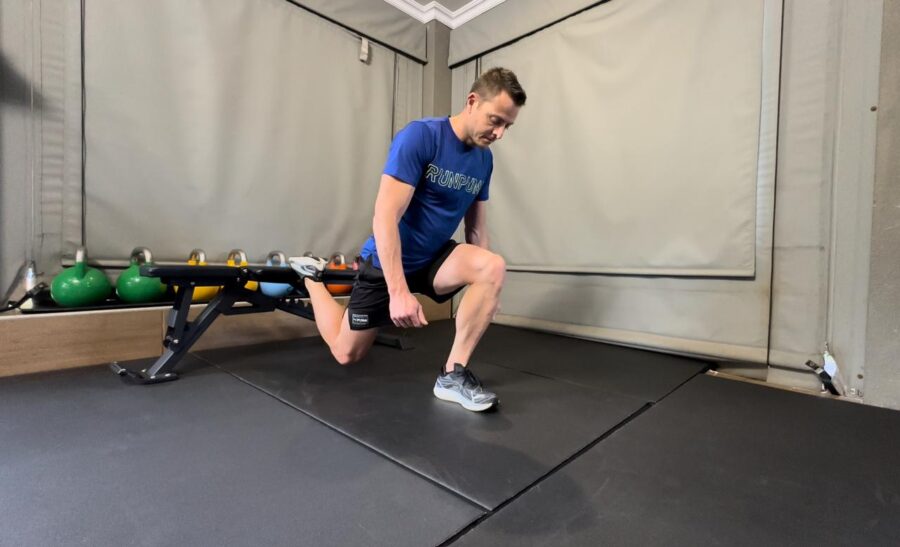
- Lunge to Explosive Step-Up: Maximize lower body strength, essential for powerful strides and uphill running.
- Bulgarian Split Squats with Rotation: Improve unilateral leg strength and balance, addressing any muscle imbalances.
- Lunge to Romanian Deadlift (RDL): Develop posterior chain strength, crucial for maintaining good running form and preventing injuries.
- Abdominal Combo: Enhance core rotational strength, improving balance and agility during runs.
- Alternating Jump Lunges: Increase explosive power and endurance.
- Single Leg Calf Raises: Improve push-off power and endurance in the calves.
Training Tips:
– Integrate three to four strength training sessions per week, with varied intensity.
– Focus on compound movements that engage multiple muscle groups.
– Incorporate plyometric exercises to enhance explosive power and speed.
Practical Tips for Incorporating Strength Training
- Prioritize Recovery: Adequate rest and recovery are crucial for strength training to be effective. Ensure you have rest days between intense workouts and prioritize sleep, nutrition, and hydration.
- Balance Training: Avoid overemphasizing one type of training. Balance your running, strength training, and rest days to prevent burnout and overuse injuries.
- Consistency is Key: Consistency in strength training yields the best results. Incorporate regular sessions into your training plan and adjust the intensity and volume based on your progress and goals.
- Listen to Your Body: Pay attention to your body’s signals and avoid pushing through pain. Modify exercises as needed to accommodate any discomfort or limitations.
- Seek Professional Guidance: Consider working with a coach or trainer, especially if you’re new to strength training. Professional guidance can help you create a personalized plan that aligns with your goals and abilities.
Conclusion
Strength training is a powerful tool for runners at all levels, from beginners to advanced athletes. By integrating strength exercises into your training routine, you can enhance your running performance, prevent injuries, and achieve your half marathon goals. Remember, the key to success lies in consistency, balance, and listening to your body. Embrace strength training as a vital component of your running regimen, and watch as your speed, endurance, and overall athleticism soar to new heights.
Basic Strength
Next Level Strength
Ultimate Strength
About the author : Jurgens A Grobler



Join our mailing list today
Insider offers & flash sales in your inbox every week.
Join our mailing list to receive the latest updates on fitness tips, nutrition advice, and exclusive offers straight to your inbox. Be the first to know about new blog posts, workout challenges, and special events hosted by JAG Fitness. Plus, gain access to insider insights from our team of expert trainers and coaches.
