

Plyometric training, often referred to as “jump training,” is increasingly recognized as a vital component for runners aiming to improve their speed, agility, and overall performance. This article delves into the mechanics of plyometrics, its benefits, and how to effectively integrate these exercises into a running regimen, catering to all skill levels from beginners to advanced athletes.
Understanding Plyometrics
Plyometric exercises involve explosive movements that engage fast-twitch muscle fibers, which are crucial for generating power and speed. The core principle of plyometrics is the stretch-shortening cycle, where muscles are rapidly stretched and then contracted, allowing for greater force production in a shorter time frame. This dynamic training method not only enhances muscle power but also improves running economy, enabling runners to maintain speed with less energy expenditure.
Benefits of Plyometric Training for Runners
Incorporating plyometric training into a running program offers numerous advantages:
- Increased Power and Speed: Plyometrics enhance the ability to generate force quickly, which is essential for sprinting and acceleration during races.
- Improved Running Economy: By optimizing muscle efficiency, plyometric training helps runners burn less energy per stride, allowing for longer distances at higher speeds.
- Enhanced Agility and Balance: Many plyometric exercises involve lateral movements that improve coordination and stability, crucial for navigating turns and uneven terrain.
- Injury Prevention: Strengthening muscles, tendons, and ligaments through plyometrics can reduce the risk of common running injuries, such as shin splints and ligament strains, by improving joint stability and muscle resilience.
- Neuromuscular Coordination: Plyometric training improves the communication between the nervous system and muscles, leading to better recruitment patterns and more efficient running mechanics.
Key Plyometric Exercises for Runners
To effectively incorporate plyometric training into your running regimen, consider the following exercises categorized by skill level, designed to progressively enhance strength and explosiveness.
Beginner Level: Establishing a Foundation
- Jump Squats
- Description: Stand with your feet shoulder-width apart. Lower into a squat, then explode upward, jumping as high as you can. Land softly and immediately go into the next squat.
- Reps: 10-12
- Sets: 2-3
- Rest: 60 seconds between sets
- Focus: Lower body strength, explosive power, and coordination.
- Alternating Single Leg Hip Thrust
- Description: Lie on your back with your upper back resting on a bench and one foot flat on the ground. Drive the knee of the opposite leg toward your chest while thrusting your hips upward with the working leg. Lower back down and switch legs.
- Reps: 10-12 per leg
- Sets: 2-3
- Rest: 60 seconds between sets
- Focus: Hip strength, glutes, and hamstrings.
- Double Foot Hop on Step
- Description: Stand in front of a low step or platform. Jump onto the step with both feet, landing softly, then immediately hop back down to the ground. Repeat.
- Reps: 10-12
- Sets: 2-3
- Rest: 60 seconds between sets
- Focus: Leg power, coordination, and balance.
Intermediate Level: Building Power and Agility
- Alternating Jump Lunges
- Description: Stand with your feet shoulder-width apart. Step forward with one leg, lowering into a lunge, then explosively jump up, switching legs in mid-air to land in a lunge with the opposite leg forward.
- Reps: 10-12 per leg
- Sets: 3
- Rest: 90 seconds between sets
- Focus: Leg power, coordination, and balance.
- Quick Switch
- Description: Stand with one foot on a box or bench. Rapidly switch legs, landing with the opposite foot on the box while the other taps the ground. Continue alternating quickly.
- Reps: 15-20
- Sets: 3
- Rest: 90 seconds between sets
- Focus: Speed, coordination, and leg agility.
- Side-to-Side Hops onto Step
- Description: Stand next to a low step or platform. Hop laterally onto the step, landing softly on both feet. Immediately hop back to the starting position and repeat on the other side.
- Reps: 10-12 per side
- Sets: 3
- Rest: 90 seconds between sets
- Focus: Lateral power, coordination, and balance.
Advanced Level: Maximizing Explosive Power and Speed
- Single Leg Hip Thrust
- Description: Lie on your back with your upper back resting on a bench and one foot flat on the ground. Drive your knee toward your chest while thrusting your hips upward with the working leg. Lower back down and switch legs.
- Reps: 10-12 per leg
- Sets: 3
- Rest: 90 seconds between sets
- Focus: Hip strength, glutes, and hamstrings.
- Depth Jump
- Description: Stand on a box, step off, land softly, and immediately jump as high as possible.
- Reps: 8-10
- Sets: 3
- Rest: 90 seconds between sets
- Focus: Explosive power, reactive strength, and leg endurance.
- Single Leg Lateral Hop on Step
- Description: Stand next to a low step or platform on one leg. Hop laterally onto the step, landing softly on the same leg. Hop back to the starting position and repeat on the other side.
- Reps: 10-12 per leg
- Sets: 3
- Rest: 90 seconds between sets
- Focus: Lateral power, single-leg stability, and coordination.
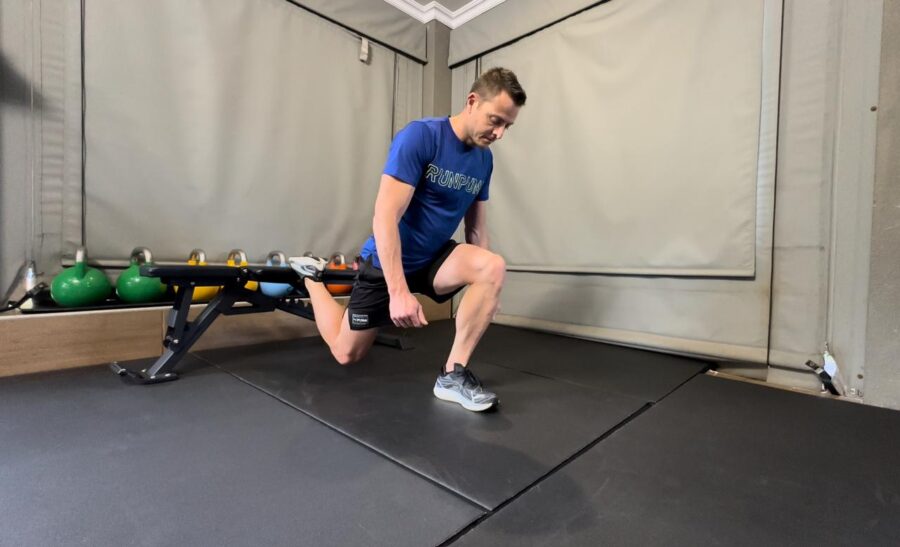
- Pogo Lunge Hop on One Side
- Description: Start in a split lunge position. Perform small, rapid hops in place, keeping your feet close to the ground. Switch legs after the set.
- Reps: 10-12 per leg
- Sets: 3
- Rest: 90 seconds between sets
- Focus: Quickness, coordination, and lower body endurance.
- Jump with 2 Feet Land with One on Step
- Description: Stand with both feet on the ground in front of a box. Jump up, landing with one foot on the box and the other foot still on the ground. Alternate legs with each rep.
- Reps: 10-12 per leg
- Sets: 3
- Rest: 90 seconds between sets
- Focus: Power, balance, and coordination.
Integrating Plyometrics into Your Training Routine
To effectively incorporate plyometric training into your running regimen, consider the following guidelines:
- Frequency: Start with 1-2 sessions per week, allowing at least 48 hours of recovery between sessions to prevent overtraining.
- Progression: Gradually increase the intensity and complexity of exercises as your strength and coordination improve.
- Warm-Up and Cool-Down: Always perform a thorough warm-up before starting and a cool-down after your workouts to prevent injuries and aid recovery.
- Focus on Form: Prioritize proper technique over speed or height to maximize benefits and minimize injury risk.
Conclusion
Incorporating these plyometric exercises into your training can significantly enhance your performance as a runner. By progressively challenging yourself through different levels of exercises, you can improve your explosive power, agility, and overall running efficiency. Whether you’re a beginner or an advanced athlete, these exercises will help you build the strength and speed necessary to excel in your running endeavors.
About the author : Jurgens A Grobler




Join our mailing list today
Insider offers & flash sales in your inbox every week.
Join our mailing list to receive the latest updates on fitness tips, nutrition advice, and exclusive offers straight to your inbox. Be the first to know about new blog posts, workout challenges, and special events hosted by JAG Fitness. Plus, gain access to insider insights from our team of expert trainers and coaches.
